Notice the change.
Pay attention when someone seems different from their usual self. Don’t diagnose or assume you know why.
“You’ve seemed quieter than usual. Want to talk?”

Huddle for Athletes / Flagship program
One person can change the moment.
A practical commitment for athletes, teammates, coaches, families, and everyone in an athlete’s world: notice, listen, ask, stay present, and help someone find support.
Why I Am One exists
An athlete shouldn’t have to reach a crisis before someone checks in.
Sometimes support begins quietly: a teammate notices a change, a coach makes room for a conversation, or a friend helps someone reach a trusted person. I Am One makes those everyday actions easier to remember and practice.
The program does not ask anyone to perform vulnerability, share a private story, or carry someone else’s safety alone. It makes care part of the environment surrounding sport.
The official I Am One commitment
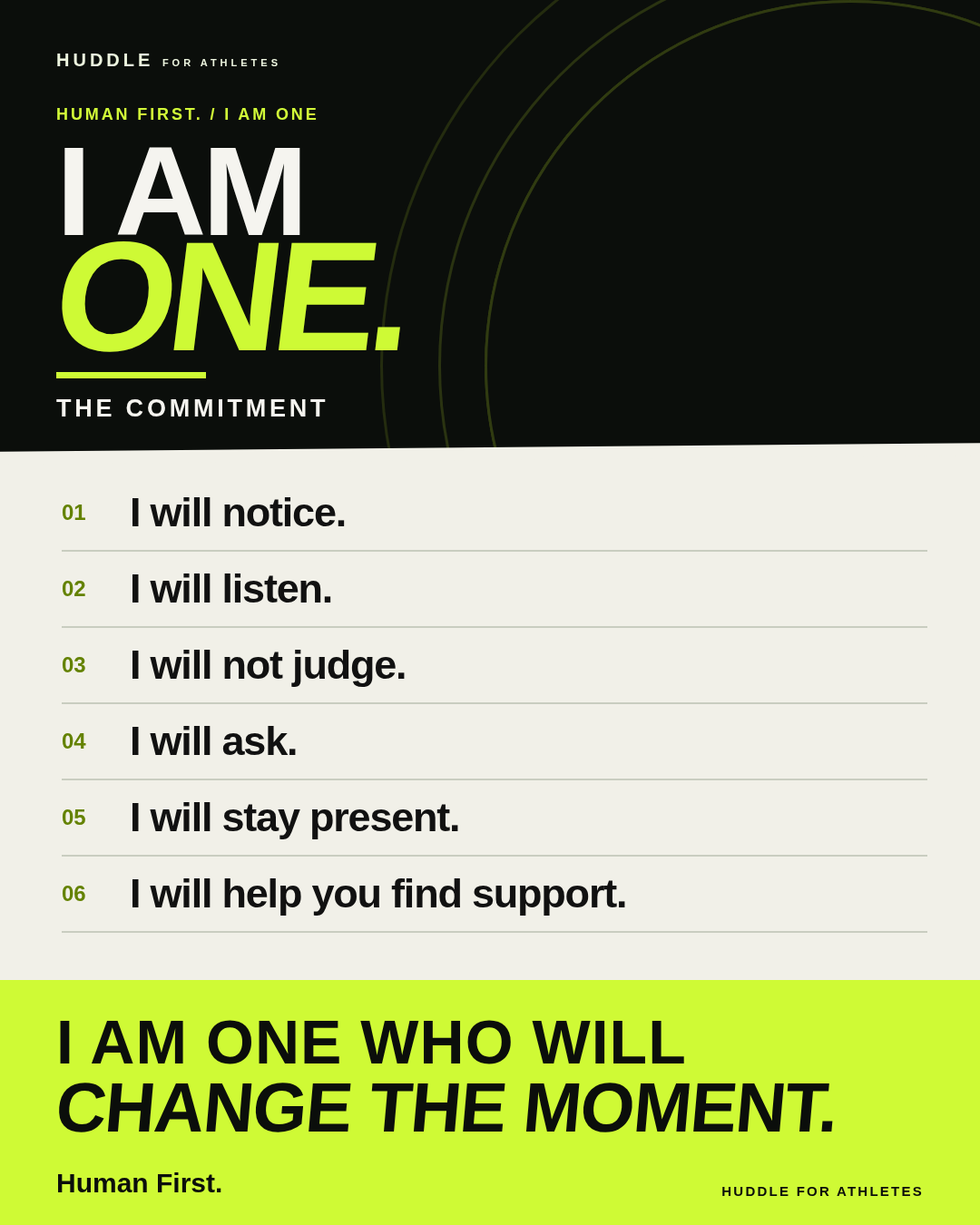
I AM ONE WHO WILL
CHANGE THE MOMENT.
You can live this commitment privately. No signature, public announcement, or disclosure is required.
The commitment in daily life
Pay attention when someone seems different from their usual self. Don’t diagnose or assume you know why.
Ask privately. Listen without judgment, pressure, or a rushed solution. A person gets to choose how much they share.
When someone needs more help, connect them to a trusted adult, counselor, clinician, or appropriate crisis pathway. Follow local policy when safety is involved.
Program identity / In the real world
This is what the commitment can look like where athletes live, learn, train, and connect.
See how the commitment can become a recognizable, practical part of school and team life—from hallways and team spaces to conversations and digital channels.
Featured artwork: sample I Am One commitment flyer. The six promises and closing declaration are reproduced exactly.
Who it is for
Athletes. Teammates. Coaches. Athletic departments. Families. Mentors. Supporters.
Everyone can practice respectful attention and connection. Nobody is required to be outgoing, confident with public speaking, or comfortable disclosing personal experiences to participate.
Share it in team meetings or school spaces without requiring anyone to sign or disclose.
Use realistic examples and age-appropriate scripts so people know what to say.
Identify real local contacts, after-hours options, and what happens after someone asks for help.
Repeat simple check-ins and confirm that support pathways remain accessible.
Care with clear boundaries
I Am One is not clinical care, crisis assessment, or a guarantee of any outcome.
When someone may be at risk of suicide, ask directly, take the response seriously, and promptly involve appropriate professional or emergency support. Do not promise secrecy about safety concerns, and do not make a peer the sole safety plan.
For immediate danger, contact local emergency services. In the U.S., call or text 988. Elsewhere, find locally appropriate crisis support through Find A Helpline.
Bring I Am One into the environment
Huddle helps schools and teams connect the visible commitment to real conversations, role clarity, and pathways to support.