NOTICE
ONE.
Notice what changed besides the injury: less contact, withdrawal from the team, disrupted routines, or worrying words.
“You haven’t been at practice or in the chat. I miss having you around.”

HUDDLE FLAGSHIP PROGRAM / SCHOOLS + TEAMS
Every sidelined athlete
stays on the team.
A school-level support system for athletes who are injured, recovering from concussion, in rehabilitation, or facing medical retirement. It coordinates five essential roles so athletes stay connected to their teams throughout recovery and transition.
Not an awareness assembly. A repeatable school practice.

01 / THE GAP
When an athlete is sidelined, the physical injury usually gets a care plan and timeline. The human impact can fall between systems: the athlete loses practices, team contact, routine, and sometimes their sense of belonging.
Sideline Strong defines who checks in, who keeps the athlete involved, and how concerns reach qualified support. It gives a school practical habits for noticing changes, maintaining team inclusion, and reaching appropriate support.
02 / THE ACTION SPINE
One practical framework for coaches, teammates, athletic trainers, families, and athletic directors—with clear responsibilities and a defined path to appropriate support.
Notice what changed besides the injury: less contact, withdrawal from the team, disrupted routines, or worrying words.
“You haven’t been at practice or in the chat. I miss having you around.”
Start a private conversation about the person—not just the medical timeline. Listen without trying to fix everything.
“How are you doing with all this? Not the knee. You.”
Know the school’s referral route. Bring in a trusted adult or qualified professional when needed; follow the established crisis plan for safety concerns.
“Would it help if we went together to talk with someone?”
03 / WHO HOLDS THE SYSTEM
Keeping an injured athlete connected cannot depend on a single caring coach. Each role gets a clear action.
Assign a Sideline Strong lead and make sidelined-athlete follow-up part of regular staff meetings.
Check in on the person early and give the sidelined athlete a meaningful, medically appropriate team role.
Ask about the athlete’s life—not only when they can compete again. Keep friendships and routines within reach.
Ask about sleep, mood, and the recovery experience within scope; use the school’s established handoff pathway.
Keep them in the chat, at the table, and involved. Tell a trusted adult when safety is a concern.
04 / ACROSS THE INJURY TIMELINE
Coach and trainer check on the person; family knows where support lives.
Protect friendships, practice connection, and a real team role.
Pair physical goals with conversations about mental load, recovery, and daily life.
Discuss psychological readiness alongside the medical team’s clearance process.
Honor the loss. Keep relationships and plan support beyond the last game.
05 / PRACTICAL TOOLS
Specific resources, not motivational filler. Each one helps someone in the athlete’s world do something useful.
Parents · Coaches · Athletic Directors
When a career ends early: honor the loss, protect identity, and keep the relationship.
Download free PDF Open PDF
Coaches · Trainers · Parents
A connection menu that follows the athlete’s medical recovery plan.
Download free PDF Open PDF
Coaches
A visible standard for coaching the human before the player.
Download free PDF Open PDF
Trainers · Athletes
A discussion guide for psychological readiness alongside medical clearance.
Download free PDF Open PDFThese resources support conversations and connection. They do not replace individualized medical care, qualified mental health support, emergency services, or school safety procedures.
06 / WHAT IT LOOKS LIKE
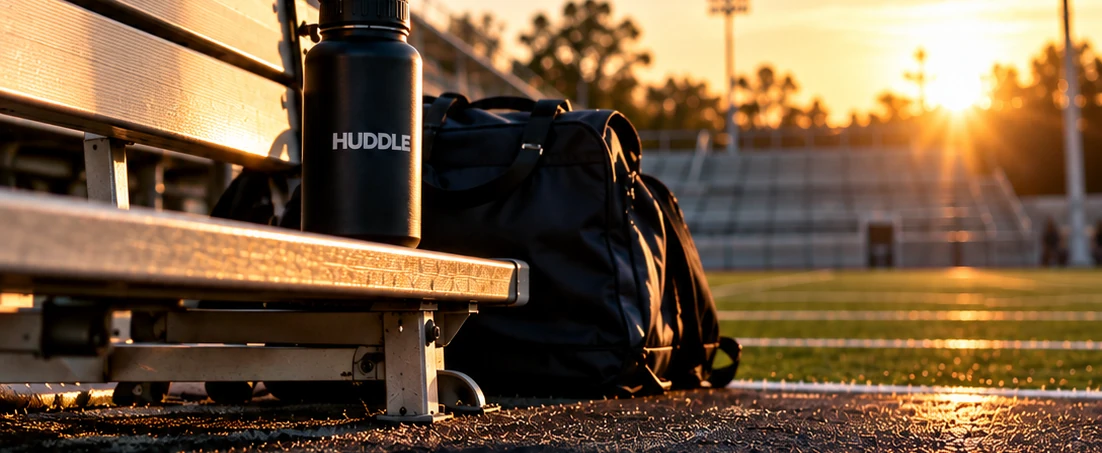
Recognition materials can reinforce the program—but only if they point to a working support system. The visual identity belongs in school halls, team spaces, staff training, and digital channels, not only on merchandise.
Shown here: a design concept, not documentary photography of program participants. Final public imagery requires suitable rights and any necessary consent.
Discuss a school activation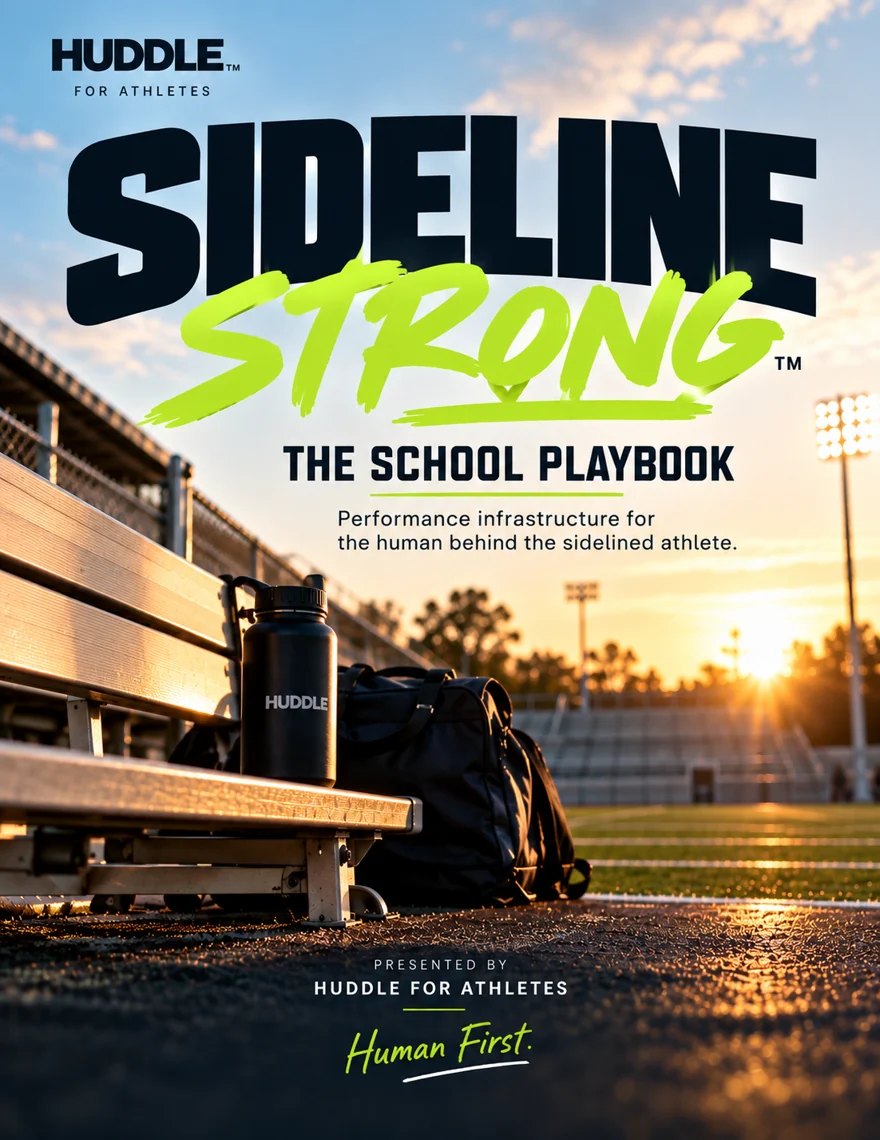
07 / HOW SCHOOLS BEGIN
Use practical tools and define the local support pathway before a team-wide rollout.
Assign responsibilities, train staff, protect team inclusion, and use a repeatable injury-timeline check-in.
For aligned schools seeking culture review, referral mapping, implementation support, and ongoing accountability.
Institutional participation requires alignment on safeguarding, established referral procedures, privacy, and unconditional belonging. Any guided implementation is scoped to the school’s actual environment and support capacity.
BRING SIDELINE STRONG TO YOUR SCHOOL
Start with the athlete who isn't at practice this week. Then build the routine that makes sure no one is forgotten the next time.
Explore a school partnership Need support now? Find resources →